Key takeaways
- Moonlight scatters across the whole sky and lowers contrast, so faint, broad targets suffer most.
- With a bright moon, choose emission nebulae through a narrowband filter, bright clusters, planetary nebulae, the planets or the moon itself.
- Keep your target at least 40 degrees from the moon, and further when you can.
- Timing helps even more than distance: the evenings after the new moon and the late nights before it are dark.
When the moon is bright, choose emission nebulae with a narrowband filter, bright clusters, planetary nebulae, the planets or the moon itself, and save galaxies and faint reflection nebulae for a dark, moonless evening. Keep your target at least 40 degrees away from the moon.
Sooner or later every astrophotographer looks up at a perfectly clear sky and realises that the moon has turned the evening into a compromise. It is worth understanding why this happens, because a bright moon does not ruin a night so much as change what the night is good for.
Why moonlight matters so much
The moon is a very large and very bright light source, and its glow scatters through the atmosphere in every direction, so that even parts of the sky far from the moon itself become brighter. A quarter moon gives roughly a tenth of the light of a full moon, but even a modest crescent raises the background enough to hide the faintest structures in a galaxy or the outer edges of a nebula. What suffers is contrast. The object is still there, but it sinks into a sky that is no longer properly dark, and you need a great deal more exposure time to bring it back out.
Which targets cope best
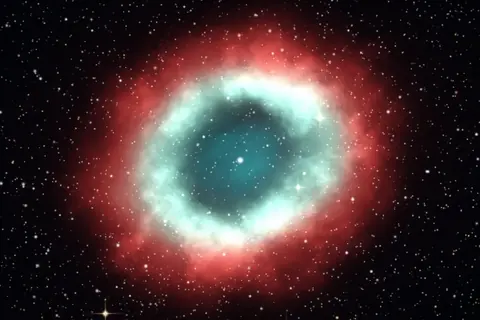
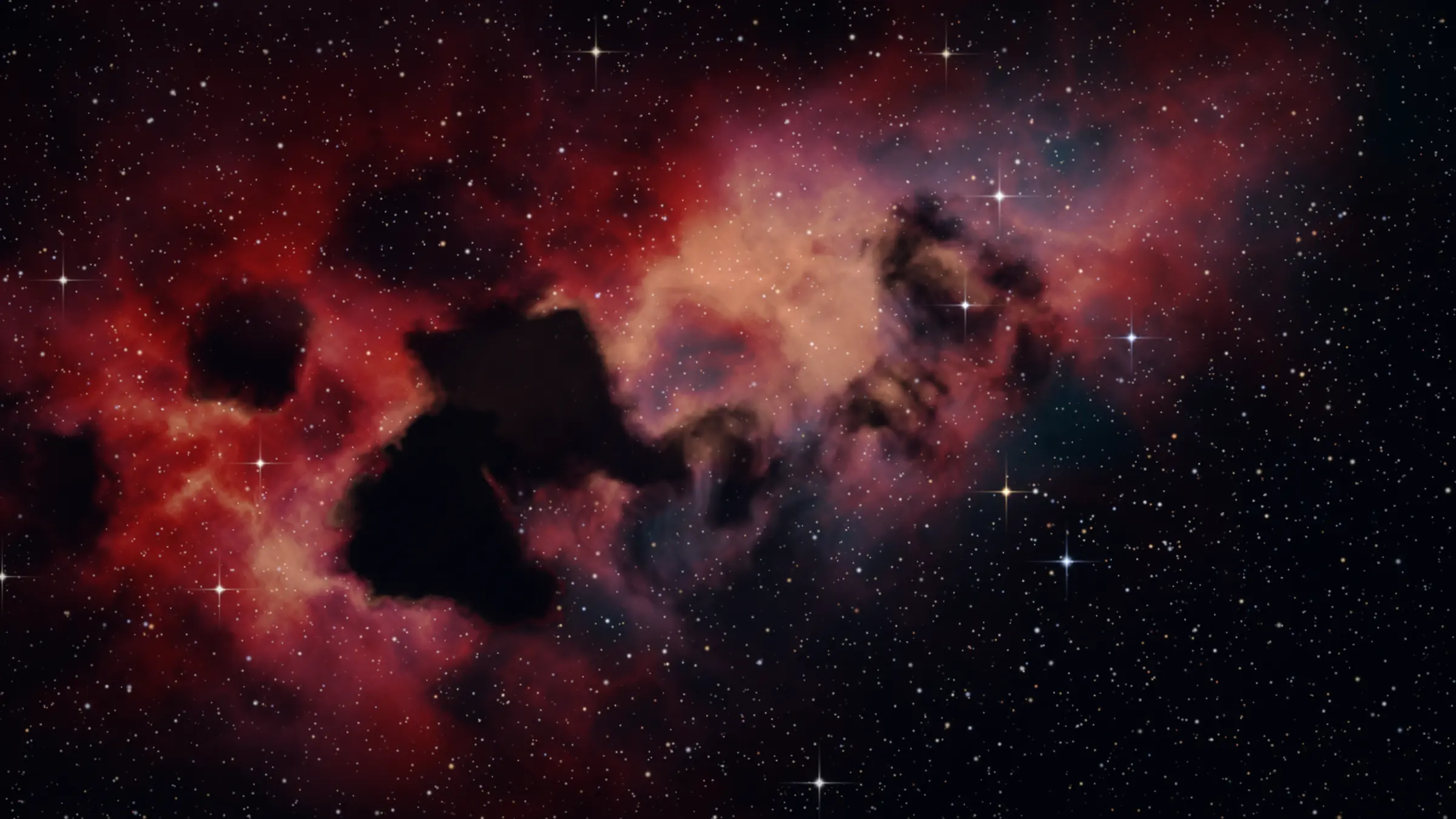
Not every target is affected in the same way. Emission nebulae glow in narrow colours, chiefly the red of hydrogen, and a filter that lets through only that colour blocks most of the moonlit sky while keeping the light of the nebula. This is the reason narrowband photography has become so popular among people who shoot from towns and on moonlit nights, and it is explained step by step in narrowband filters without the jargon. Globular clusters and bright open clusters are compact and bright, so they cope well too. Galaxies and broad, faint reflection nebulae are the most vulnerable, since their light is spread across all colours and is very dim.
| Kind of target | Tolerance | Why | Examples for an autumn evening in Finland |
|---|---|---|---|
| Emission nebulae with a narrowband filter | High | The filter blocks most of the moonlit sky and passes the nebula's own colour | The Heart Nebula (IC 1805), the Soul Nebula (IC 1848), the Pelican Nebula (IC 5070) |
| Globular and bright open clusters | High | They are compact and bright | The Double Cluster in Perseus, the globular cluster M15 in Pegasus |
| Planetary nebulae | Moderate to high | They are small, bright and shine in narrow colours | The Ring Nebula (M57), the Dumbbell Nebula (M27) |
| Galaxies | Low | Their light is spread over all colours and is dim | The Andromeda Galaxy (M31) |
| Faint reflection nebulae and dust | Very low | They are broad and very dim | The Iris Nebula (NGC 7023) |
| The moon and the planets | Excellent | They are bright, and the moon is the subject | The moon itself, Jupiter, Saturn |
Use distance and timing
Moonlight is strongest close to the moon, so choosing a target on the opposite side of the sky is an easy improvement.
| Distance between the target and the moon | Effect on your frames |
|---|---|
| Under 30 degrees | Strong glow, best avoided |
| 40 to 60 degrees | A reasonable working minimum, especially with a narrowband filter |
| More than 90 degrees | A noticeably darker background, and about the best you can do |
Timing helps even more. In the days after a new moon the crescent sets in the early evening and leaves the rest of the night dark. In the days before a new moon the crescent rises only in the small hours, which means that the first part of the evening is dark instead. The nights around the full moon are the ones on which the moon is up all night, and those are the nights to spend on the moon itself, on bright clusters or on the planets.
| Phase | Share lit by the sun | When the moon is up | The evening for deep sky work |
|---|---|---|---|
| New moon | 0% | Only in daytime | The best of all |
| Waxing crescent | 1% to 49% | Sets in the early evening | Dark for the rest of the night |
| First quarter | 50% | Sets around midnight | Dark after midnight |
| Waxing gibbous | 51% to 99% | Sets after midnight | Dark only in the small hours |
| Full moon | 100% | All night | The moon, planets, bright clusters, narrowband |
| Waning gibbous | 99% to 51% | Rises in the late evening | Dark in the early evening |
| Last quarter | 50% | Rises around midnight | Dark in the evening |
| Waning crescent | 49% to 1% | Rises in the small hours | Dark for most of the night |
Here is the moon as your browser calculates it for today.
The moon tonight
Your browser works out the phase of the moon from today's date. If this message stays visible, scripts may be switched off in your browser.
How AstroNight uses this
When you open Tonight's plan, the app first works out how much of the moon is lit and how dark your surroundings are, and it lets those two facts steer its suggestions. On a washed out night it leans towards narrowband and bright targets, and on a dark night it is more willing to suggest broad, faint subjects such as the Milky Way. Each suggestion comes with starting settings and a short explanation of the reasoning, written in plain language or in more technical terms depending on how much equipment you have told the app about.
A small habit that pays off
Whatever you decide on a given evening, write down the phase of the moon in your notes together with the result. After a few months the pattern becomes obvious, and you will know from experience, rather than from a chart, which of your favourite targets you can still photograph under a half moon and which of them must wait for darker nights.
The moon decides what the night is good for. Your job is to choose the right target for it.
Frequently asked questions
Can you do astrophotography with a full moon?
Yes, but the choice of target changes. Emission nebulae through a narrowband filter, bright clusters and the planets all work well, and the moon itself is a rewarding subject. Faint galaxies and broad reflection nebulae are best saved for moonless nights.
How far from the moon should my target be?
As a working guide, at least 40 degrees, and the further the better. A target on the opposite side of the sky gets a much darker background than one near the moon.
Which moon phase is best for deep sky photography?
The new moon and the nights around it are best, because the sky is dark all night. Crescent phases are also good if you shoot while the moon is below the horizon: after a new moon the evening sky is dark late, and before a new moon the early evening is dark.
Does a quarter moon ruin Milky Way photos?
It brightens the sky enough to wash out much of the Milky Way's faint structure, so it is better to shoot when the moon is below the horizon. A quarter moon gives about a tenth of the light of a full moon, which is still a great deal.
Do light pollution filters help against moonlight?
Hardly. Moonlight is spread over all colours, so a broadband filter removes little of it. Narrowband filters, which pass only a thin slice of colour, are the effective answer for emission nebulae.
Sources and further reading
AstroNight is now on the App Store. The free planner and coach for astrophotography works on iPhone and iPad with iOS 17 or later, offline, with no account. Get it on the App Store.