Key takeaways
- The Andromeda Galaxy (M31) is the nearest large galaxy to ours, about 2.5 million light-years away, and it holds roughly a trillion stars.
- From Finland it never sets, and in autumn it climbs to about 70 degrees, so it is easy to place well.
- A 135 to 200 millimetre lens on a small star tracker frames the whole galaxy with its two companions, M32 and M110.
- The core is bright, but the outer disc needs many frames. An hour of total exposure makes a big difference.
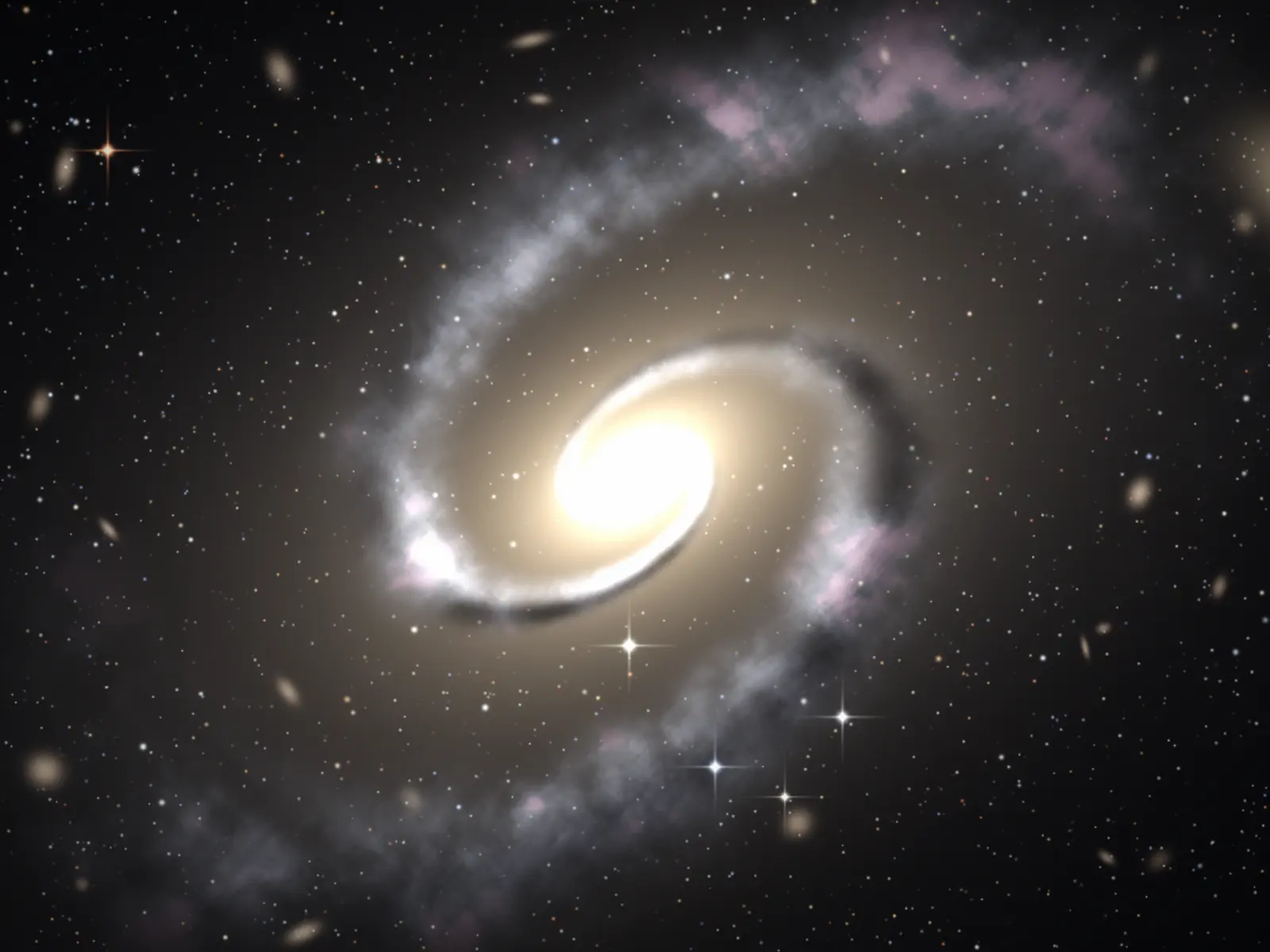
The Andromeda Galaxy, catalogued as Messier 31 or M31, is the nearest large galaxy to our own, about 2.5 million light-years away. A lens of 135 to 200 millimetres on a small star tracker frames the whole galaxy with its two companions, and from Finland it never sets.
On a dark autumn evening, a faint, elongated smudge appears among the stars of the northern sky. It is not a cloud or a flaw in your eyesight. It is the light of roughly a trillion stars, and it has been travelling since long before our species existed.
Andromeda at a glance
| Fact | Value |
|---|---|
| Catalogue names | Messier 31 (M31), NGC 224 |
| Constellation | Andromeda |
| Distance | About 2.5 million light-years |
| Apparent size | About 3° by 1°, roughly six full moons side by side |
| Brightness | Magnitude 3.4, visible to the eye from a dark site |
| Stars | Roughly a trillion |
| Companions | Two smaller galaxies, M32 and M110 |
| Motion | Approaching us at about 110 kilometres per second |
| Best months from Finland | September to December, in the evening |
Why it is so special
M31 is the most distant object that most people can see without any optical aid. It is big, too. It stretches across about three degrees of sky, though only the brightest central part is visible to the eye. A camera reveals much more, including the dust lanes that thread through its disc and two smaller companion galaxies, M32 and M110.
It is approaching us at about a hundred kilometres per second. For many years it was said that the two galaxies would collide and merge in about four to five billion years. Newer studies suggest that the outcome is far less certain, and one analysis published in 2025 put the chance of a merger within the next ten billion years at about one in two, so it is safest to say that the future of the encounter is still being worked out.
Finding it
Look for the constellation Cassiopeia, the W shape high in the north on autumn evenings. Follow one of the arms of the W towards the Great Square of Pegasus, and you will find a short chain of two stars with a faint patch of light just beyond them. Use averted vision, which means looking a little to one side of the object, and the patch becomes more obvious, a trick that is explained in what red light does for your eyes. From a dark site you will see it without difficulty, and even a suburban sky should show the bright core on a moonless night.
At the latitude of Helsinki the galaxy is above the horizon all the time, and it reaches an altitude of about 70 degrees, so it is easy to place well above the haze and the trees. In early October it crosses the southern sky close to midnight.
Which lens frames it?
The galaxy and its two companions together span a little under four degrees, so the right lens depends on how much space you want around them.
| Focal length | Field of view | How the galaxy looks |
|---|---|---|
| 85 mm | 24° by 16° | A small galaxy in a wide, rich star field |
| 135 mm | 15° by 10° | The whole galaxy, with plenty of room round it |
| 200 mm | 10° by 7° | The galaxy and its companions, comfortably framed |
| 300 mm | 7° by 4.6° | The galaxy fills the frame |
| 400 mm | 5° by 3.4° | A tight frame, with nothing to spare |
| 600 mm | 3.4° by 2.3° | Only the core and part of the disc |
A simple plan to photograph it
You do not need a telescope. A lens with a focal length of 135 to 200 millimetres on a camera and a star tracker will frame the entire galaxy with its companions. Without a tracker, a short focal length and many brief exposures can still give a pleasing result.
- Choose the night. Pick a night when the moon is below the horizon or thin, in the autumn evenings, when the galaxy stands high in the sky.
- Frame it. Use a lens of 135 to 200 millimetres on a camera and a star tracker, which frames the whole galaxy with its companions.
- Focus carefully. Focus on a bright star, because soft stars will hide the fine dust lanes.
- Take many exposures. With a tracker, use 60 to 120 seconds at a moderate ISO, and take as many frames as you can.
- Add flat frames. Take flat frames afterwards, since vignetting looks like a false glow around a galaxy.
- Stack and process. Stack the frames, then stretch and adjust the result.
The core is bright and will tolerate a short exposure, but the outer disc needs many frames. That is why the picture improves so dramatically when you stack, a subject covered in its own article.
| Total exposure | What the picture shows |
|---|---|
| 15 minutes | The bright core and a hint of the disc, with plenty of noise |
| 1 hour | The dust lanes and the nearest parts of the arms begin to show |
| 3 hours | A clean disc, structure in the dust lanes and both companions |
| 10 hours or more | The faint outer parts, if the sky is dark enough |
A target that grows with you
Andromeda is one of those objects you can return to every year, each time with better equipment and more skill. AstroNight's comparison view is made for this. When you photograph the same target more than once, it lays the sessions side by side, so you can see for yourself how much your Andromeda has improved.
Come back to the same target every year, and let the pictures show you how far you have come.
Frequently asked questions
How far away is the Andromeda Galaxy?
About 2.5 million light-years. The light that you see tonight left the galaxy long before our species existed, which makes it the most distant object that most people can see with the naked eye.
Can I see the Andromeda Galaxy with the naked eye?
Yes, from a dark site on a moonless night, as a faint, elongated smudge. Looking slightly to one side, which is called averted vision, makes it easier to see. Even a suburban sky should show the bright core.
What lens is best for photographing Andromeda?
A lens of 135 to 200 millimetres on a full frame camera frames the whole galaxy with its companions M32 and M110, with room to spare. A longer lens fills the frame with the galaxy but needs better tracking.
When is the best time to photograph Andromeda from Finland?
From September to December, in the evening, when it stands high in the sky. It never sets from southern Finland, and in early October it crosses the sky close to midnight. Choose a night without a bright moon.
Will the Andromeda Galaxy collide with the Milky Way?
It is approaching us at about 110 kilometres per second, but the outcome is uncertain. A 2025 analysis put the chance of a merger within the next ten billion years at about one in two, which is quite different from the older claim that it was certain within five billion years.
Sources and further reading
AstroNight is now on the App Store. The free planner and coach for astrophotography works on iPhone and iPad with iOS 17 or later, offline, with no account. Get it on the App Store.